
The National Judicial College has awarded Missouri Supreme Court Judge Mary Russell with the Sandra Day O’Connor Award, its highest honor. Judge Russell has twice served as Chief Justice of the state’s highest court and has led the court system through innovative changes by prioritizing relationship building and communication throughout the court system, state government and the broader community. Like the award’s namesake, Judge Russell has put an emphasis on civics education in her state.
“I cannot think of anyone else – not just in Missouri but anywhere – who more closely manifests the spirit of civic education than Judge Russell because it permeates almost everything she does,” wrote Missouri Supreme Court Judge Kelly C. Broniec in her nomination letter. “Judge Russell is a force for change, persevering to promote projects she knows can make a lasting impression on Missourians.”
Building Relationships
After working in private practice, Judge Russell began her judicial career on the Missouri Court of Appeals, and, nine years later, joined the Missouri Supreme Court where she has served since 2004. She quickly understood that a strong relationship between the state judiciary and state legislature was going to be key to gaining the support needed for new court initiatives and ensuring legislators understand how the court system works.
“Everyone comes to service in the state capital with good intentions of making our state and the lives of our citizens better. But not everyone agrees on the same means to get to that goal. It has always been my belief that if you follow the Golden Rule and treat others as you would like to be treated, you get off on the right foot when meeting someone new, “ Judge Russell said. “I think after a while, you find out you have more in common with each other than you have differences. And if you enjoy a meal together, it is hard to be mean to someone if you have shared a meal with them and experienced a moment of connection.”
In the early 1990s, the first female judge on the Missouri Supreme Court started the tradition of inviting all of the female legislators in the state to lunch with all of the female judges from across the state to talk about issues that affect both branches of government and to get to know each other. As chief justice, Judge Russell continued and elevated the experience.
“Originally, there were only a handful of women judges and legislators in the state, and now we have so many women they can’t all fit into our courtroom where we have the lunch,” Judge Russell said. “Do we cut off reservations, squeeze people in, change the location? It is a good problem to have.”
Judge Russell expanded upon the concept by creating a chili dinner and “pie caucus” during legislative session so members of the court can interact with legislators in an informal setting.
“When we host these events, I am often surprised that the legislators themselves often do not know each other because of political barriers,” Judge Russell said. “One of my favorite memories is when my husband and I invited a group of legislators to our home in Jefferson City. I looked over at one point and an urban Democrat legislator was playing our baby grand piano, surrounded by rural Republican legislators. All were singing old gospel tunes. It was a real moment of detente. When you break bread together it is a way to make peace, and foster understanding and unity.”
Missouri is often considered one of the nation’s leaders in the adoption of new technology, including a comprehensive electronic filing at all case levels, a public case system, electronic jury summons response, a statewide fine schedule and payment system, and video conferencing in every courthouse, installed long before the pandemic. All these innovations are the result of the three branches of state government working together.
Undertaking a statewide tour
Like most judges, Judge Russell values and understands the key role court clerks and staff play in the justice system. When clerks were asked in a short span to adopt a new case management system, implement redaction rules and comply with a constitutional amendment requiring them to spend much time searching cases to expunge certain marijuana convictions, she hit the road and visited all 46 judicial circuits in Missouri to show her support and listen to concerns.
“The people behind the scenes are the glue that hold us all together,” she said. “They’re not invisible, and we appreciate everything they’re doing. Some clerks told me they were expecting me to do a ‘white glove inspection,’ but nothing could be further from the truth. I learned a lot by listening to the court staff and seeing first-hand the activities that they perform every day in our courthouses around the state.”
During the visits, she was often joined by state legislators from the area, who observed a variety of court proceedings and talked with court staff. Two issues often raised — jury pay and a lack of beds and staffing in juvenile detention facilities — were later addressed through legislation and passed this last legislative session.
Reaching people through newspaper columns
As chief justice, Judge Russell wrote monthly newspaper columns that were distributed around the state. Written in a simple style that often used storytelling tactics, she tackled issues like jury duty, judicial elections, the role of court-appointed special advocates in cases involving children, as well as other issues focused on how the court system works.
“I put myself in the shoes of the public as to what their common questions were. There was just no one place to go to find out how a grand jury works, or how our juvenile court system works,” she said. “By writing a monthly column, I was able to provide some explanation and connect with real Missourians. It was surprising how many times the columns were picked up by the news media and how people across the state would tell me they had read it.”
Civics education: You be the judge
The Missouri Courts civic education website includes 21 ready-to-go presentations, searchable by audience age and length. The interactive sessions have audience members work through issues involving the Fourth Amendment, fairness, the First Amendment as well as specific cases involving school searches, student journalism, and free speech.
If Judge Russell is the presenter, it is very likely the audience will at some point step into the shoes of a judge. She created the “you be the judge” technique when working with state legislators and other groups. Using real-life examples, she tries to put the audience in the shoes of a judge so they can see how difficult and trying the job can be and how important it is that laws are written in an unambiguous manner.
“I want the public to read beyond headlines to realize that sometimes your hands are tied as a judge because a trooper didn’t get a warrant to do the blood alcohol content test, or a patient cannot sue because the legislature has written a statute that limits the amount of time that someone can file a medical malpractice claim,” Judge Russell said. “Our hands are often tied. We cannot rewrite the law. We don’t resolve cases how we wish they would come out. That’s one important message I try to get across because it is the biggest misnomer about judges.”
Over the years, Judge Russell has been recognized by multiple civic and Bar organizations for her dedication to civics education and service to the community.
“We talk about what a job of a Supreme Court judge is, and we divide it into thirds,” she said. “We say about a third of our work is resolving legal issues, writing opinions, making legal decisions. Another third is administrative where we are the superintendent over all the state courts and we establish the rules and procedure. And then the other third is, you can call it external relations and communications. It is educating the public, the Bar, and other branches of government so they understand what judges do and, as a result, we can all work together to improve our state.”
Judge Russell received the Sandra Day O’Connor Award during the national Appellate Judges Education Institute Summit in Minnesota November 13.
Learn more about Judge Russell:

The Hon. Leslie A. Hayashi (Ret.), a retired district court judge from the First Circuit in Honolulu, Hawai...

The National Judicial College has named Dean Aviva Abramovsky as its next president and chief executive off...
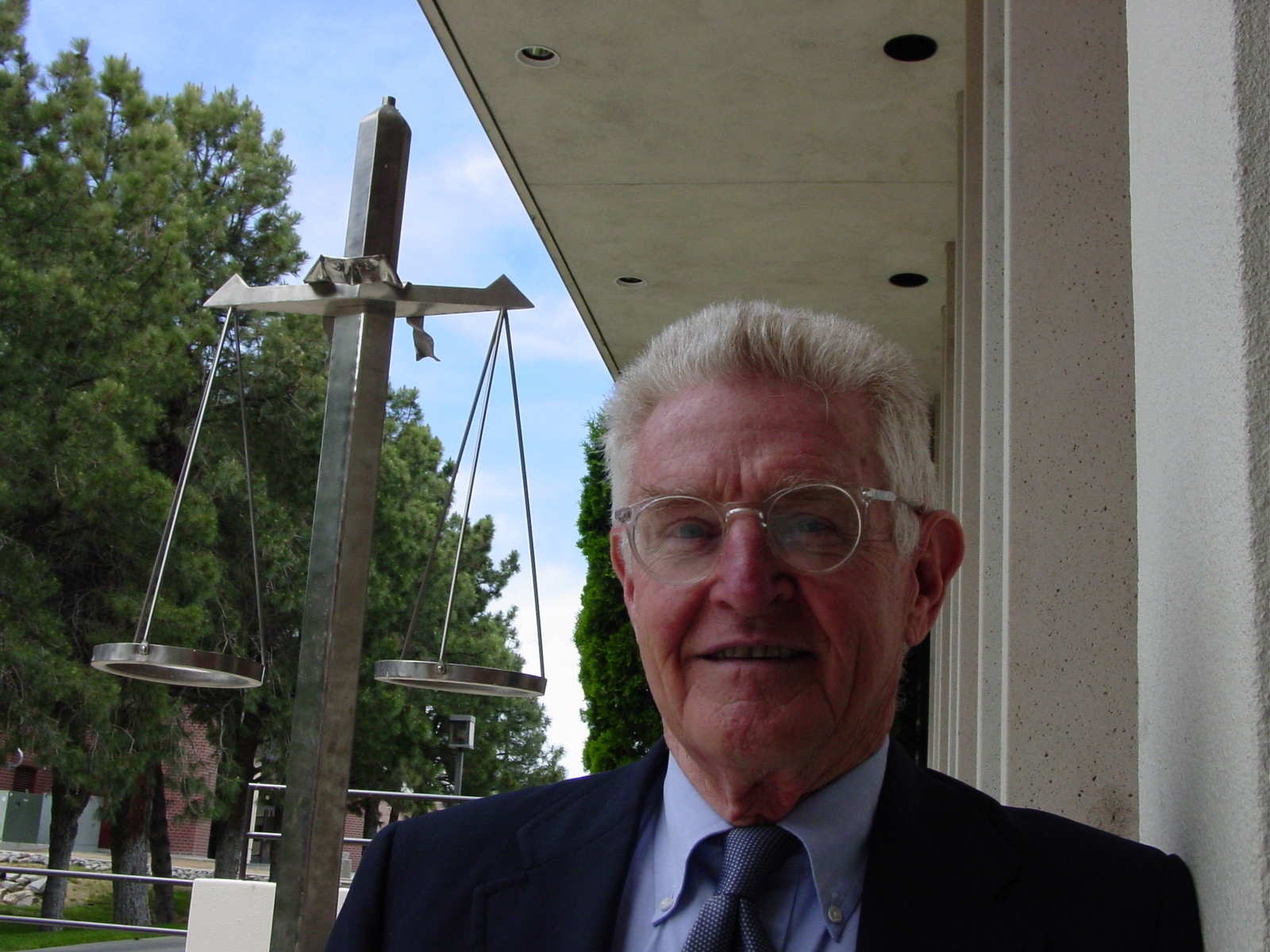
Ernest C. Friesen, Jr., the first dean of The National Judicial College, passed away on December 11, 2025, ...
The National Judicial College has awarded Missouri Supreme Court Judge Mary Russell with the Sandra Day Oâ€...

Emeritus Trustee Bill Neukom (left) with former Board of Trustee Chair Edward Blumberg (right) at the NJC 60...